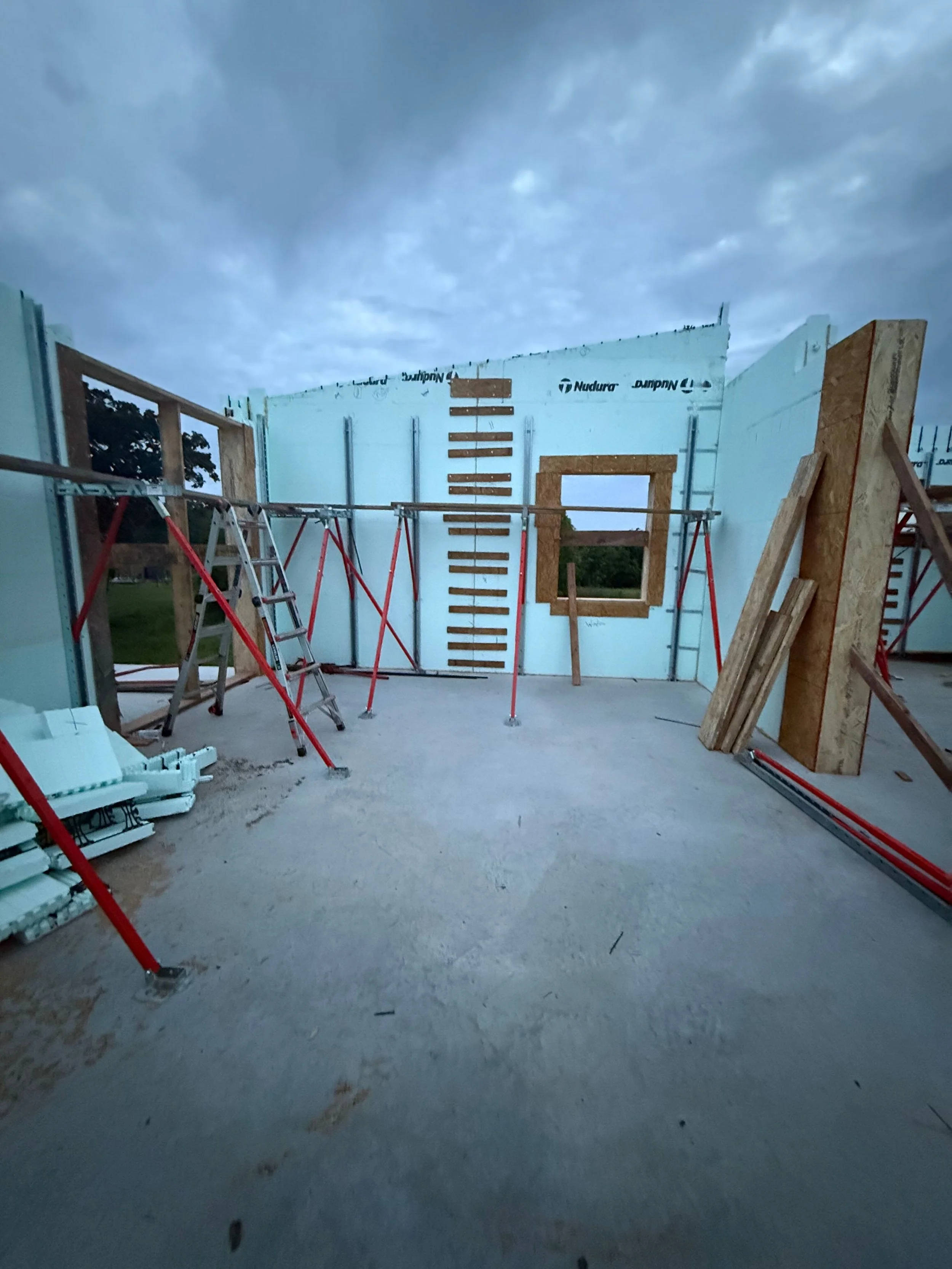
Permanent comfort, Peace of mind.
Energy Efficiency
One of the biggest benefits is reduced energy consumption.
Continuous insulation on both sides of the concrete wall minimizes thermal bridging.
High thermal mass helps stabilize indoor temperatures.
Many ICF homes use significantly less heating and cooling energy than comparable wood-frame homes.
Strength and Durability
ICF walls are extremely strong because they combine reinforced concrete with permanent insulation.
Better resistance to hurricanes, tornadoes, and high winds.
Less susceptible to rot, termites, and moisture-related structural damage.
Sound Reduction
The combination of concrete and foam provides excellent acoustic insulation.
Outside noise from traffic, neighbors, or storms is greatly reduced.
Interior spaces tend to be quieter and more comfortable.
Improved Comfort
ICF homes often feel more comfortable year-round.
More consistent indoor temperatures.
Fewer drafts and cold spots.
Better humidity control when paired with proper HVAC design.
Fire Resistance
Concrete does not burn, and ICF wall systems generally provide longer fire-resistance ratings than standard wood framing.
Greater protection from external fires.
Potentially reduced fire-related risk to the structure.
Better Indoor Air Quality
Because ICF homes are typically very airtight:
Less infiltration of pollen, dust, and outdoor pollutants.
Reduced opportunities for mold growth when moisture is properly managed.
Improved control of ventilation through mechanical systems.
Potential Insurance Benefits
On the Gulf Coast, insurers may offer discounts for homes with enhanced resistance to wind, fire, or other hazards. Availability varies by insurer and location. Ask us about Fortified homes.
Lower Long-Term Maintenance
Concrete walls generally require less maintenance than wood framing because they are not vulnerable to:
Termites
Wood rot
Warping
Moisture-related structural deterioration